


Galapagos Whale Shark Project
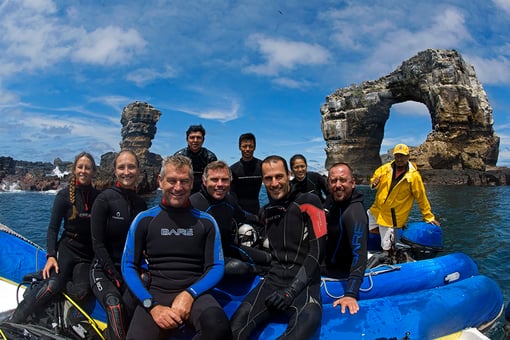
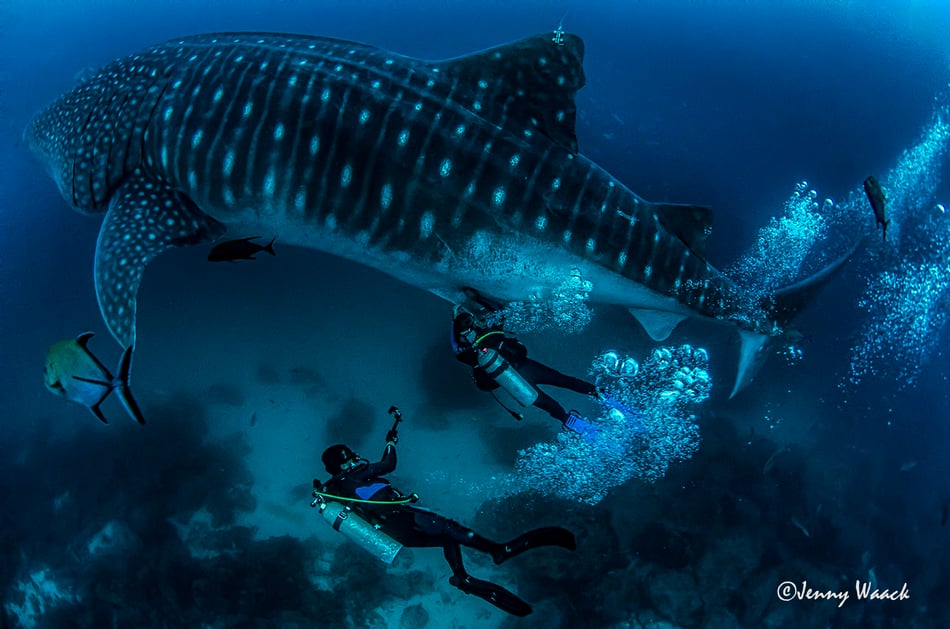
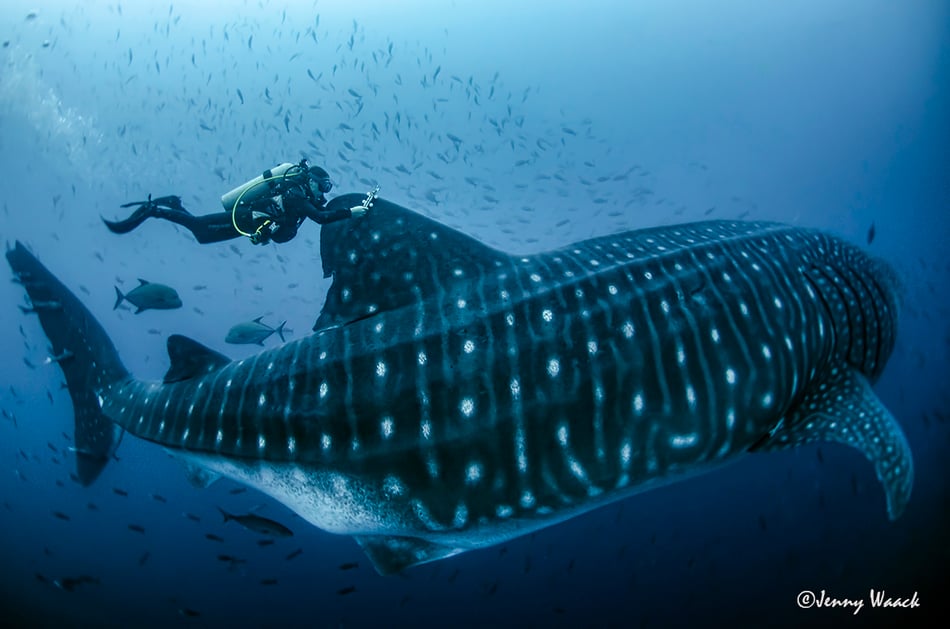
The Galápagos Whale Shark Project (GWSP) is a long-term scientific research initiative dedicated to studying and protecting whale sharks within the Galápagos Marine Reserve. The project focuses especially on the large female whale sharks that seasonally visit the northern islands, making the Galápagos one of the most important whale shark aggregation sites in the world.
Through a combination of photo-identification, satellite tagging, and in-water behavioral observations, the project collects critical data on whale shark movements, migration routes, habitat use, and population structure. This research provides essential insights needed to protect whale sharks both locally in the Galápagos and across international waters.
Our History & Mission
The Galapagos Whale Shark Project was born of a curiosity about whale sharks and love of the Oceans!
"I was surprised at how little was known in general about the species, not only in the Galapagos but in general worldwide.
I became more aware of how whale sharks had been exploited historically and also how industrial fishing both targeted and incidental was beginning to seriously affect certain populations. With this came the realisation that without baseline data and at least a rudimentary understanding of their life cycle there is no manner in which we can create the platform, legal and physical to protect them.
The ensuing years we collected data about seasonality, frequency of sightings, sex and behaviour but with the realisation that we needed to expand our area of study and findings a different approach was needed and the Galapagos Whale Shark Project launched."
Jonathan R. Green, Director & Founder of the Galapagos Whale Shark Project
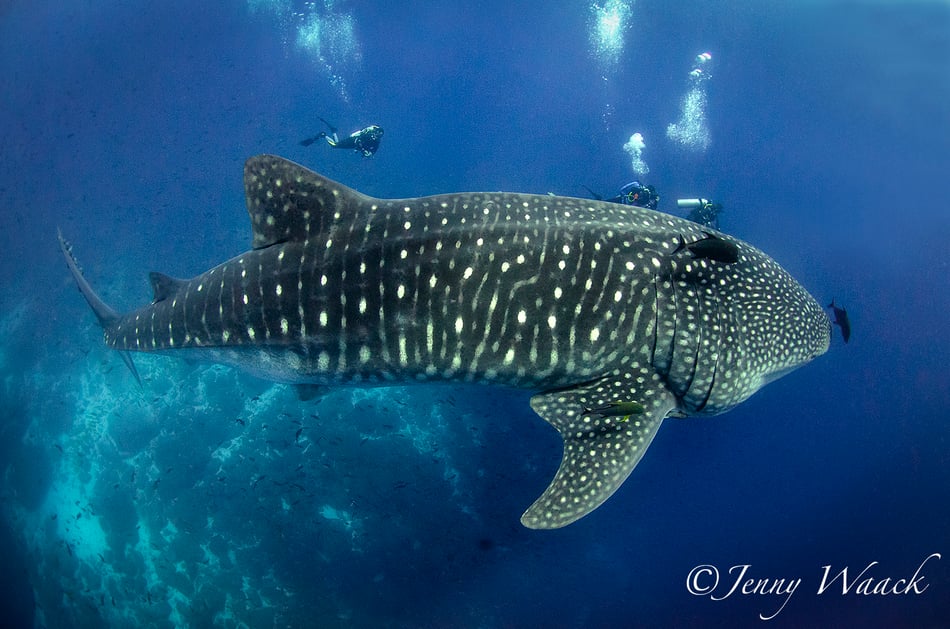
Still, one of the greatest mysteries of our blue planet, scientists with the Galapagos Whale Shark Projecthave been working for over a decade to gather data that might help better understand and protect whale sharks as well as all the mega marine fauna of the region. The research project is well known in the UK and was also featured in the new ‘BBC Blue Planet II’ where Sir David Attenborough examines the future of our blue planet.
Questions such as where they breed, where they give birth and where the young live for the first 3-5 years of life are some of the questions we have been trying to answer. Do they follow marine corridors and how they do connect with other populations from the adjacent Indian and Atlantic Oceans? The answers to these questions and more are necessary if we are to protect the species against the threats that face the future of all marine life.
If you share the same curiosity and care about the oceans then please enter our
webpage www.galapagoswhaleshark.org and follow us on: